
Insights from the SgWX Industrial Water Session
As AI workloads scale rapidly across Southeast Asia, the data centre industry is facing a less visible but equally urgent challenge: water. Cooling infrastructure for high-density compute environments consumes significant volumes of water — and in a region where water resilience is a strategic priority, sustainable water management is no longer optional. It is a design imperative.
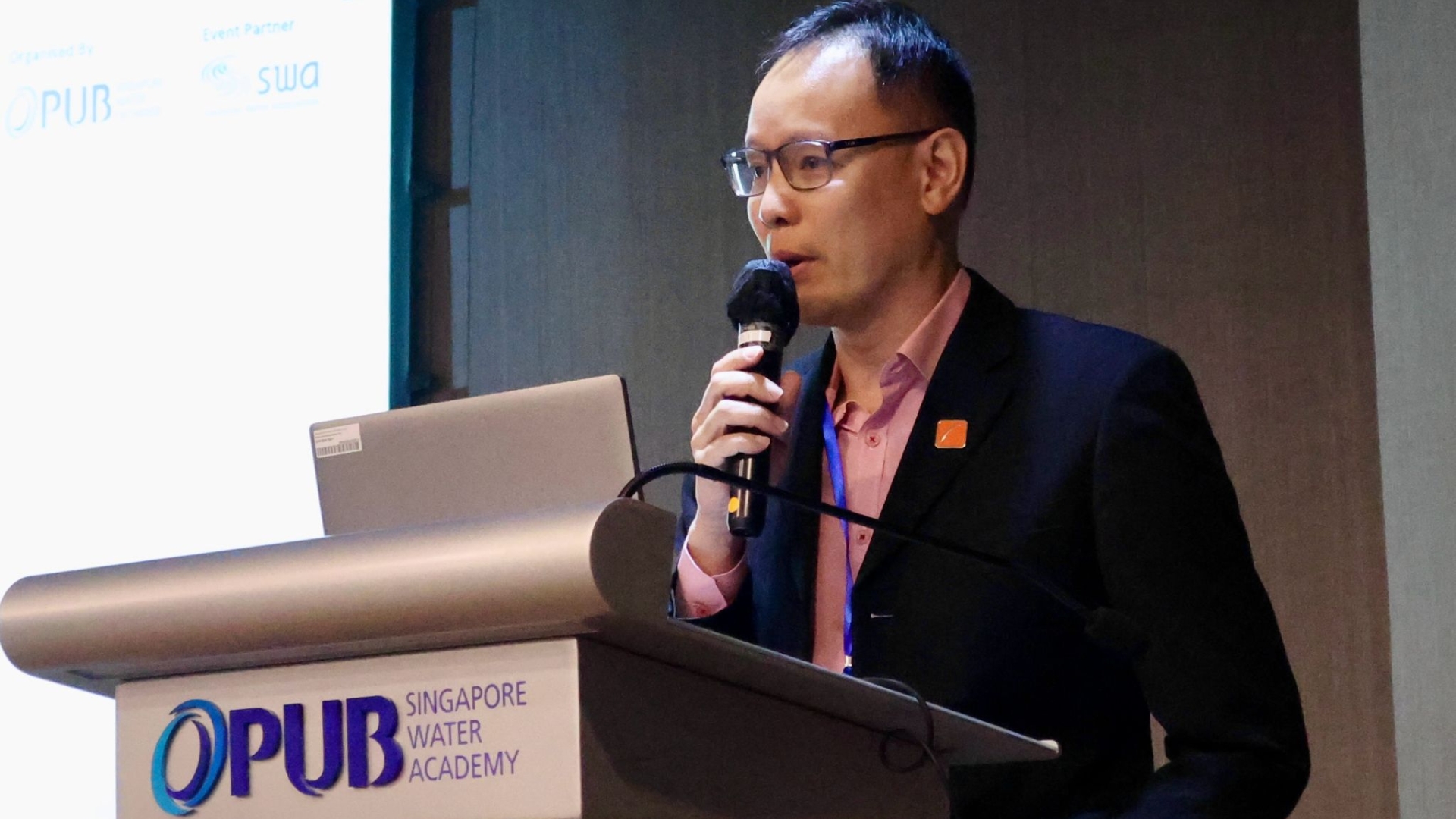
Bridge Data Centres (BDC) recently had the opportunity to address this challenge head-on at the SgWX Industrial Water Session, hosted at PUB WaterHub in Singapore. The session brought together over 140 industry leaders from the data centre ecosystem, technology providers, and water sector stakeholders to exchange ideas and advance practical solutions.
What Is the SgWX Industrial Water Session?
Organised by the Singapore Water Exchange (SgWX), the Industrial Water Session is a platform for Singapore’s industrial and technology sectors to tackle shared water challenges. The event convenes operators, innovators, policymakers, and investors — creating the conditions for partnerships that can accelerate the adoption of water-efficient technologies at scale.
This edition focused specifically on data centres — one of Singapore’s fastest-growing infrastructure sectors and an increasingly significant contributor to industrial water demand.
Key Themes: Water, Cooling, and Digital Infrastructure
The session surfaced several critical themes shaping the future of data centre water management in Singapore and the broader region.
Bridge Data Centres’ Approach to Sustainable Water Management
Lye Yit Tho, VP, Design Delivery at BDC, shared BDC’s philosophy and practical approach to water sustainability — one grounded in the realities of building and operating data centres in tropical environments like Singapore and Johor, Malaysia.
Integrated Water Reuse Systems
Rather than treating water management as a compliance exercise, BDC designs for circular water use from the ground up. This means integrating water reclamation and reuse systems into the core infrastructure design, reducing reliance on potable water sources and minimising discharge to drainage networks.
Adaptive Cooling Strategies
In tropical climates, static cooling approaches fail to account for the variability of ambient conditions and evolving IT load profiles. BDC employs adaptive cooling strategies that respond dynamically to both environmental and operational inputs — optimising water use efficiency without compromising thermal performance or system reliability.
Designing for Long-Term Operational Resilience
Performance metrics like Power Usage Effectiveness (PUE) and Water Usage Effectiveness (WUE) matter — but BDC’s design philosophy goes further. The focus is on long-term operational resilience: ensuring that infrastructure performs reliably over a 15–25 year asset lifecycle, even as climate conditions, regulatory requirements, and AI workload densities evolve.
Case Study: Malaysia’s First Data Centre at a Water Reclamation Plant
One of BDC’s most significant achievements in sustainable water management is its Johor facility — Malaysia’s first data centre to apply effluent water and cooling technologies at a Water Reclamation Plant.
This first-of-its-kind deployment demonstrates that treated effluent water can serve as a reliable, cost-effective source for data centre cooling — reducing demand on potable water supplies while improving the overall water sustainability profile of the facility. It is a model that holds significant potential for replication across the region, particularly as water scarcity concerns intensify.
Read the full case study: Johor’s First Water Treatment Plant →
Why Sustainable Water Management Matters for AI Infrastructure
The conversation at PUB WaterHub underscored a broader industry shift. As AI infrastructure requirements intensify, the environmental footprint of data centres — and specifically their water footprint — is attracting growing scrutiny from regulators, hyperscalers, and enterprise customers alike.
Key reasons sustainable water management is now a competitive differentiator for data centre operators:
- Regulatory pressure: Governments across Southeast Asia are introducing water efficiency mandates and reporting requirements for large industrial water users.
- Customer expectations: Hyperscalers and enterprise cloud customers increasingly require environmental performance commitments — including water — as part of procurement criteria.
- Operational risk: Water scarcity events pose a direct threat to cooling system performance and, by extension, data centre uptime and SLA compliance.
- Cost efficiency: Water reuse and efficiency technologies reduce operational expenditure over the long term, improving the total cost of ownership of data centre infrastructure.
Building a More Sustainable Digital Economy Together
Sessions like the SgWX Industrial Water Session demonstrate what becomes possible when data centre operators, water technology innovators, regulators, and industry bodies share a room and a common agenda. The problems are complex — but so is the collective expertise available to solve them.
Bridge Data Centres remains committed to advancing practical, context-driven solutions that improve the environmental performance of digital infrastructure in Southeast Asia. We look forward to continued collaboration with the SgWX community and our industry partners as we work toward a more water-resilient digital economy.
Interested in learning more about BDC’s approach to sustainable data centre design? Get in touch with our team.
BDC participated in the SgWX Industrial Water Session at PUB WaterHub, Singapore. This article reflects insights shared at the event by Lye Yit Tho, VP, Design Delivery at BDC.