
Powering Singapore’s Digital Economy
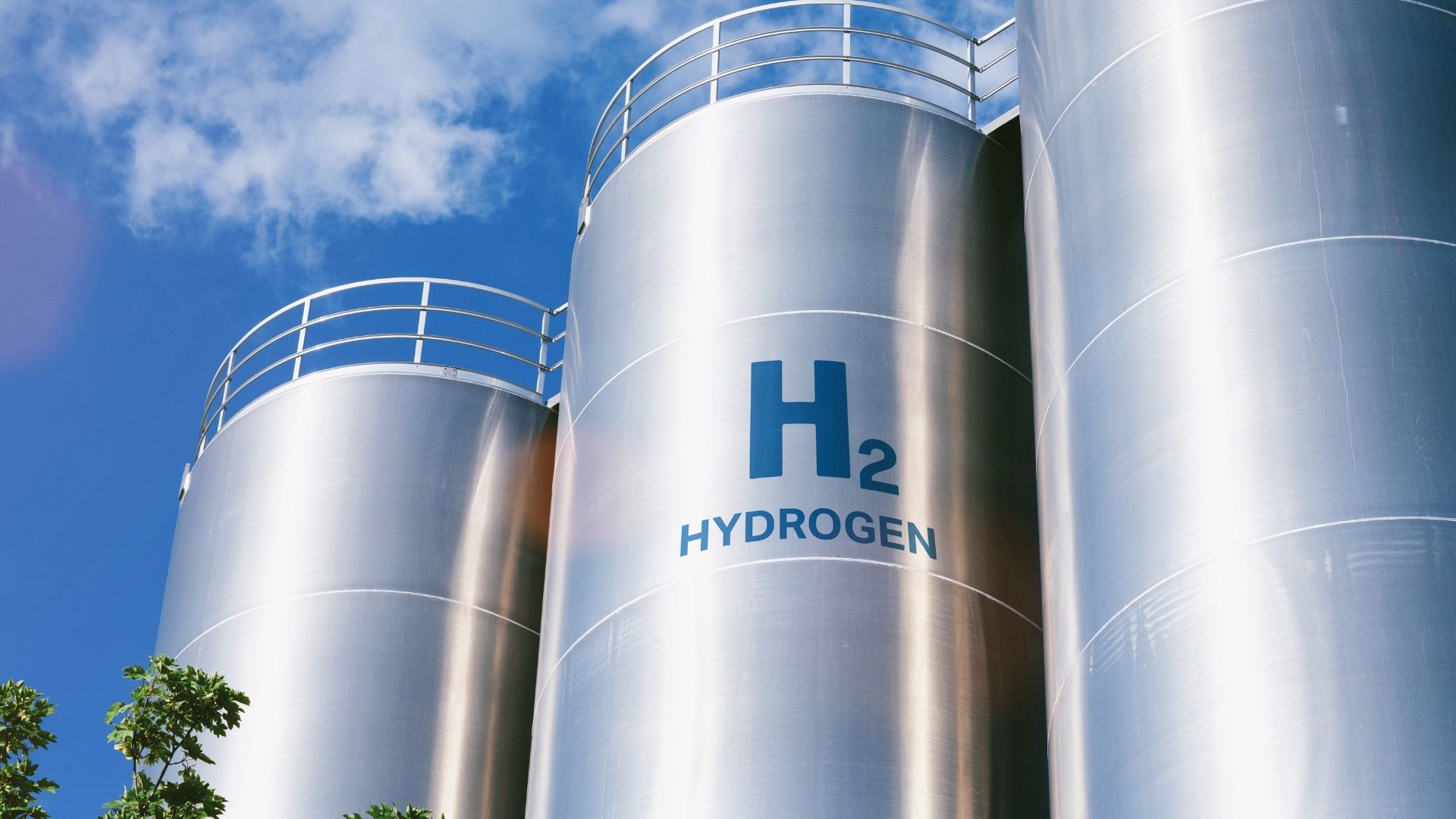
Offshore hydrogen power generation could support the next phase of digital growth in Singapore and beyond.
As AI adoption accelerates across Asia Pacific, demand for more advanced digital infrastructure is rising alongside the energy required to power it. For the region’s data centre operators, securing a sustainable and reliable power supply is a long-term strategic priority.
This challenge is particularly acute in Singapore, where digital infrastructure demand continues to surge amid land constraints and tightly managed energy resources.
Hydrogen and Singapore’s energy transition
To support Singapore’s long-term energy security and decarbonisation goals, the government has identified low-carbon hydrogen and its derivatives as a key potential pathway under its National Hydrogen Strategy.
Hydrogen is widely regarded as a promising low-carbon alternative to traditional fossil fuels and is gaining traction globally as governments and industries seek cleaner energy pathways.
According to the Energy Market Authority, hydrogen could potentially meet up to 50% of Singapore’s power needs by 2050 and has the potential to be adopted across different sectors as a low-carbon fuel or feedstock.
As Singapore advances its hydrogen ambitions, the focus will increasingly shift from policy and research towards developing practical deployment models that can support real-world adoption at scale.
Pioneering innovative hydrogen solutions
Amidst this backdrop, Bridge Data Centres (BDC) is at the forefront of exploring how hydrogen can support the future of AI-ready digital infrastructure.

BDC has partnered with Concord New Energy (CNE) to jointly develop Singapore’s first floating hydrogen power generation solution tailored for next-generation AI data centres.
The collaboration combines BDC’s expertise in hyperscale data centre development and operations with CNE’s technical capabilities in renewable and hydrogen energy systems.
The initiative reflects BDC’s broader commitment to exploring scalable low-carbon energy pathways that can support long-term digital infrastructure resilience in land- and energy-constrained markets such as Singapore.
Bridge Data Centres and Concord New Energy are jointly developing Singapore’s first floating hydrogen power generation solution for AI-ready digital infrastructure.
Benefits of offshore deployment
The innovative floating hydrogen power generation concept presents a practical deployment model for land-scarce Singapore.
By shifting hydrogen-related infrastructure offshore, scarce land can be reserved for other strategic urban and industrial uses.
The modular design of the barge-based infrastructure also provides scalability advantages, enabling additional hydrogen generation units to be deployed efficiently and quickly to meet future demand growth.
Offshore deployment also enables physical separation between hydrogen handling systems and core data centre operations, while providing greater flexibility in hydrogen transport, storage and future capacity scaling.
The concept further leverages Singapore’s established strengths in maritime engineering, offshore operations, and energy logistics.
“The accelerating demand for AI-ready data centres requires new energy architectures that are resilient, scalable, and sustainable. This collaboration with Concord New Energy reflects our commitment to diversifying long-term power pathways”, said Mr Eric Fan, CEO of Bridge Data Centres.
BDC leading the race in renewable energy
BDC’s latest hydrogen initiative builds on the Company’s expertise as a leading digital infrastructure provider in Asia Pacific, with close to a decade of operational experience.
BDC has a portfolio of high-quality data centre assets in Malysia, Thailand and India. The Company is currently one of Asia Pacific’s top three hyperscale data centre providers by live capacity, with plans to further expand into new markets in the region and beyond.
BDC has also been at the forefront of pioneering advanced data centre technologies, including liquid cooling, while leveraging its glocal approach to collaborate with local utility partners on innovative renewable energy solutions for its AI-ready data centres.
In Malaysia, for example, BDC has a major power agreement with Tenaga Nasional Berhad under the Corporate Renewable Energy Supply Scheme (CRESS) to integrate renewable energy into its data centre operations. In addition, over 50% of the energy supply for BDC’s data centre assets in Malaysia is powered by solar energy harnessed from local solar farms.
“While we are a data centre operator, our role in the energy sector goes beyond being a pure consumer of power. BDC is an early mover in this space and an active player across Asia Pacific’s renewable energy spectrum,” said Eric Fan, CEO of Bridge Data Centres.

BDC and CNE will collaborate to strengthen Singapore’s hydrogen ecosystem.
Strengthening Singapore’s hydrogen ecosystem
BDC and CNE will also collaborate with Singapore’s Nanyang Technological University to support the development of Singapore’s hydrogen ecosystem, as well as accelerate the research, engineering, and deployment of scalable clean energy solutions across the value chain.
Through its Concord Clean Energy Research Centre, CNE will expand applied clean energy research and collaborate with local institutions, including NTU and public agencies, to drive the development of scalable clean hydrogen energy solutions in Singapore.
The partnership will facilitate structured knowledge transfer and local talent development in hydrogen systems integration, renewable optimisation, and advanced energy engineering.
The initiative is expected to support the creation of high-value jobs and specialised technical competencies in these domains.
In addition, the collaboration is anticipated to catalyse investment in hydrogen-related infrastructure, including storage, transport, generation assets, and associated supply chains, strengthening Singapore’s clean energy transition.
“By pioneering Singapore’s first floating hydrogen generation solution, we are exploring innovative models that integrate clean energy with advanced digital infrastructure”, added Mr Fan.
Looking ahead
The collaboration between BDC and CNE reflects BDC’s proactive strategy to future-proof its power architecture, diversify long-term sourcing pathways and strengthen infrastructure resilience.
Beyond Singapore, the initiative aims to establish a scalable offshore-integrated clean power framework that can be adapted for other land- and energy-constrained data centre markets across the region.
As hydrogen technologies mature, early-stage pilots such as the floating hydrogen power generation concept will play an important role in accelerating Singapore’s energy transition.